What is pacing?
A short answer:
Pacing is the speed, rhythm, and flow of a video. It controls how the audience feels time passing.
If you want a deep answer, keep reading.
Pacing has existed since ancient storytelling — slowing down for suspense, speeding up for action. In early cinema, pioneers like Eisenstein showed how shot length and montage shaped emotion. Today, from Hollywood films to Instagram reels, pacing plays the important role in "what the viewer should feel"
Pacing is as important as the story itself. It can make or break a story and an Editor is solely responsible for it.
That's why as an editor it's your responsibility to understand pacing to a deep extent.
This page is designed to explain you everything there is about pacing that's important to you as a video editor in a beginner friendly way.
Why is pacing Important
Pacing engages human attention and hold it for long. But it isn't just about cuts and speed,
It's about emotional timing.
The longer you hold a frame, the deeper it feels and vice versa.
But when the pacing fails, too fast or too slow… it ruins not just the story but what audience feel. In fact, it determines the success of any story regardless of the length from 3 hour films to a 30 second reel.
In the following sections you will able to understand the nuances of pacing and implement them to make your story more impactful and engaging.
The two sides of the same Coin
While cuts sets the visual rhythm of a video, music set the audio rhythm.
They are 2 sides of the same coin working together to manipulate the tempo and emotion of a scene.
Cuts (Visual Rhythm)
Cut decides how long each shot lasts directly controlling the visual tempo.
Fast cuts → urgency, chaos, excitement.
Long shots → suspense, calm, reflection.
Example: Action scenes cut every 2 seconds (winter soldier and Captain America Fight scene) vs. a drama that holds on a face for 10 seconds (Forest gump graveyard scene) 3:00 - 3:20
Music (Audio Rhythm)
Music sets the emotional tempo and shapes how the audience feels the visuals.
Fast tempo → makes even long shots feel quicker.
Slow tempo / silence → stretches moments, deepens emotion and builds tension.
Example: A slow tracking shot feels tense with a pulsing soundtrack, but relaxed with ambient music.
The Science behind the art of Pacing
Pacing works because our brains are wired to respond to rhythm, contrast, and anticipation.
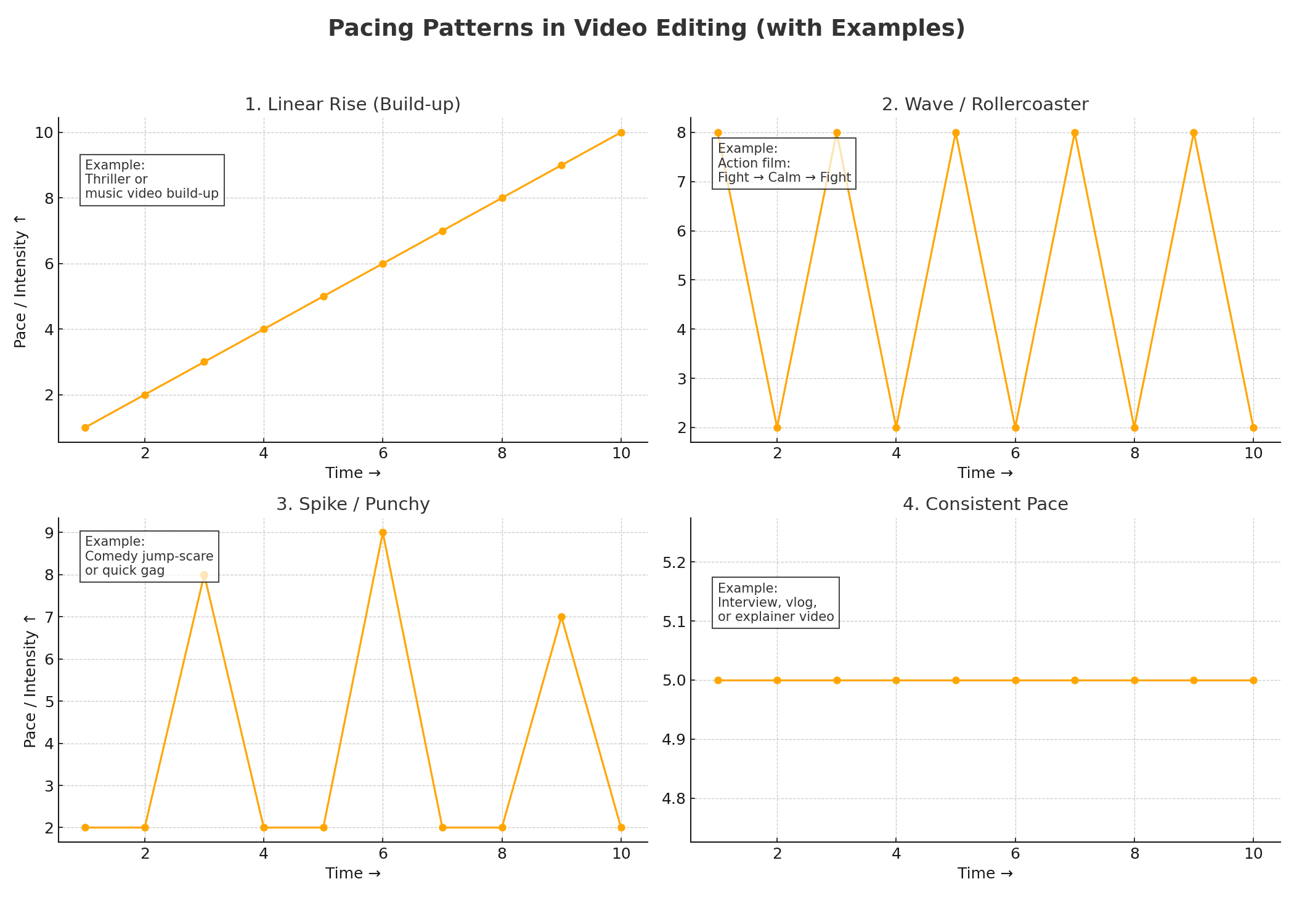
To understand the basics of pacing here I explain the 4 major common used pacing style:
Linear Rise (Build up)
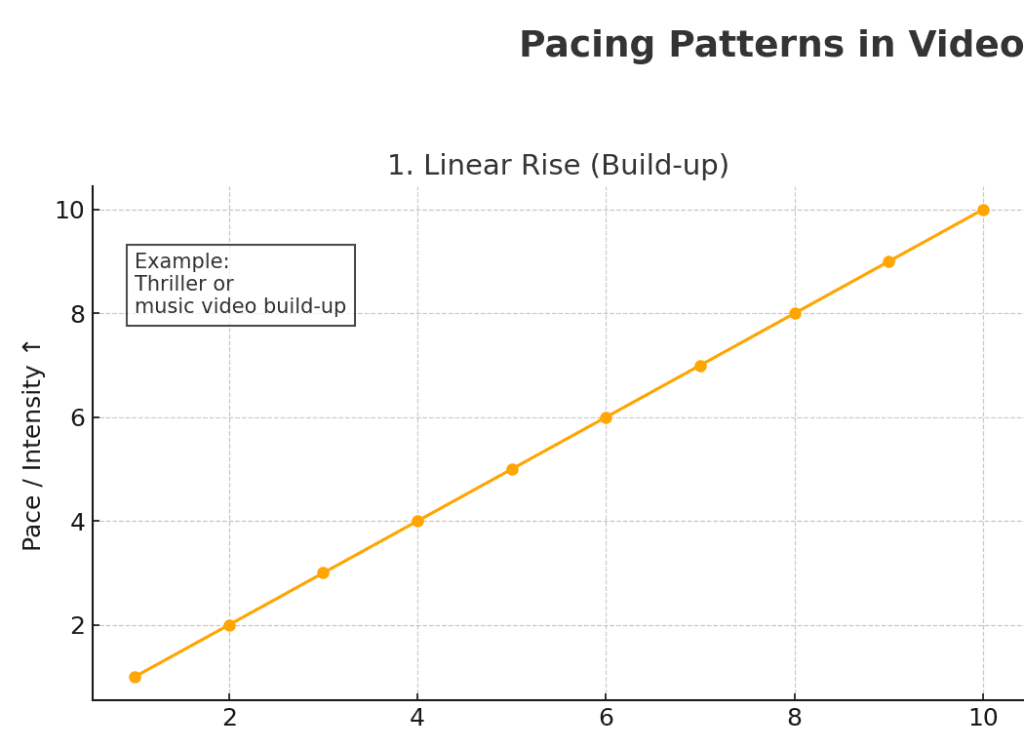
Take this Trailer for instance: IT: Welcome to derry
The first 30 seconds begins at a low pace with a mellow vibe music. As the story proceeds further you can notice 2 things:
Cuts: Cuts begin to happen every 1 second intensifying the theme and story delivery (0.50)
Music: Music elevate the tone of the scene. The story begins with a bright tone and a mellow vibe but as the tone gets darker and shady the music compliments the tone with thriller and tense music.
Psychology in Action:
Tenstion and Anticipation: our brains crave payoff after buildup.
Attention sharpening: as pace increases, focus narrows.
Building up the tension and depth of the story, just like a rollercoaster going up before the big drop - Villan Reveal
The Wave
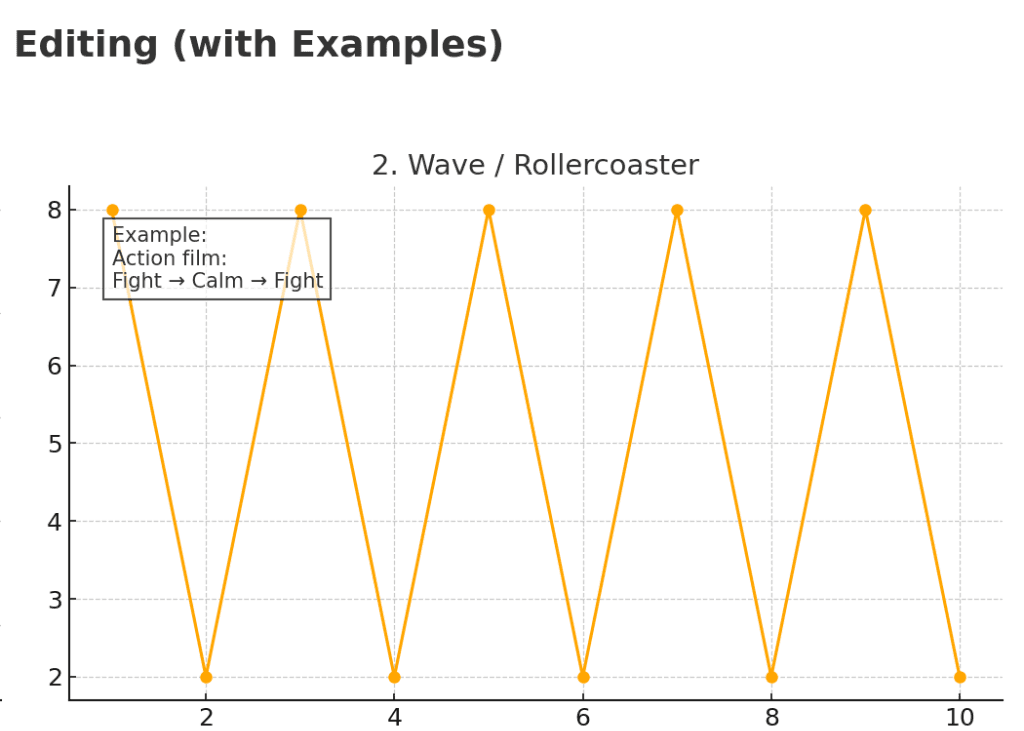
For example: Watch this trailer of Mad Max Fury Road
Opening begins at a high point with fast cuts and intense music up until 20th second
Then proceeds with a slow pace to reveal characters and theme of the story up until the 47th second
Then again proceeds with a high pitch, fast cut edits to finish at a high point building up curiosity
Psychology at play:
Tension & release cycle — alternating fast/slow keeps us engaged without burnout.
Memory boost — contrast between high-energy and calm moments makes both stand out.
Most action films begin with a high point and end with an high point with a calm dialogue in between that builds up the entire story plot.
Spike/Punchy
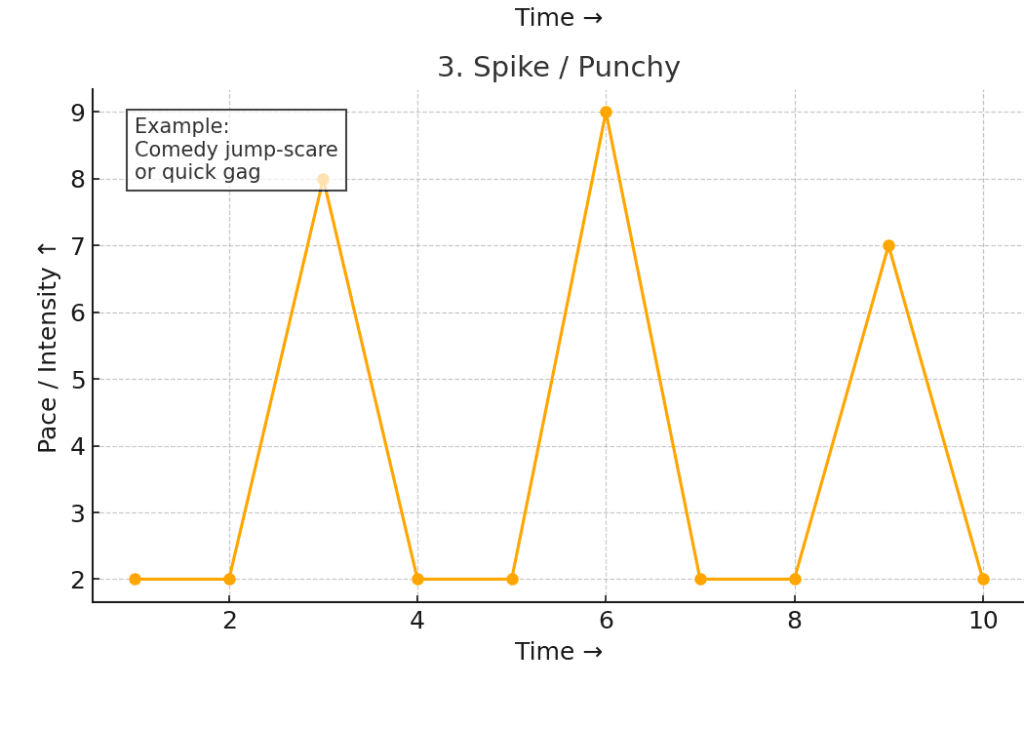
Psychology at play:Surprise & shock — sudden bursts jolt the brain, triggering dopamine.
Works because the brain pays extra attention to sudden changes.
Consistent Pace
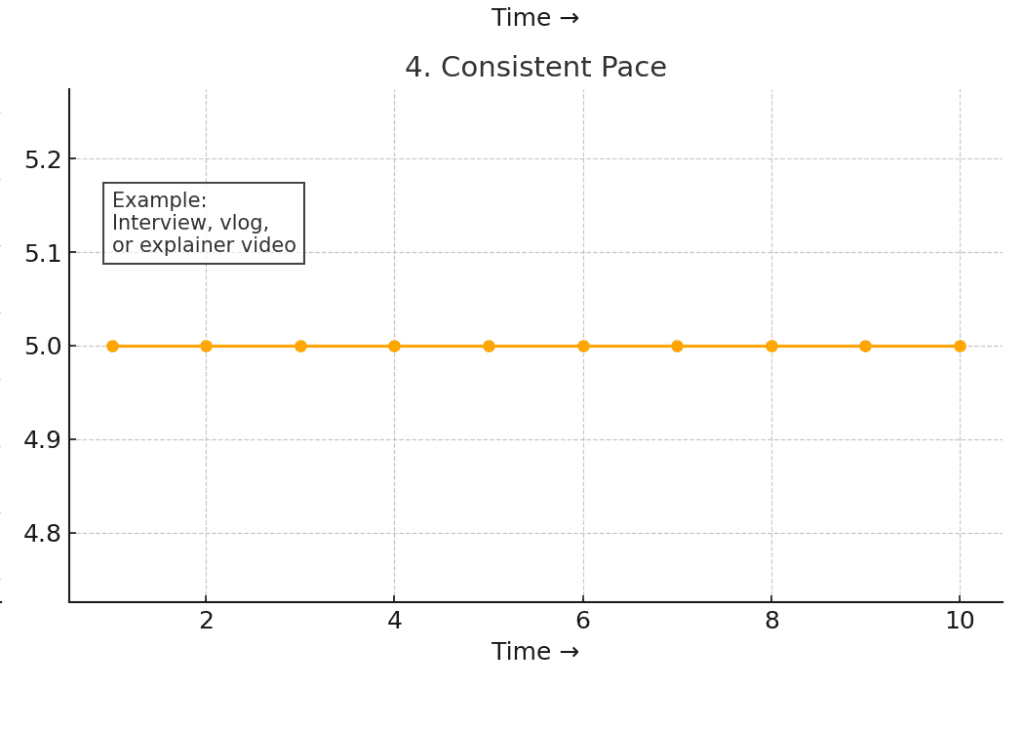
Most Youtube videos based on Educational and documentary style videos falls under this category. And movies with long and static talking scenes like this scene from the movie: Batman the dark knight risesThe scene doesn't carry any emotional weight by keeping the tone plain and simple.
No rapid cuts, no music to build up any emotion
Just a casual feel good scene.
This is known as the consistent pace.
Psychology at play:
Emotional synchronization — viewers settle into the rhythm, relaxed and stable.
Good for focus and comprehension, since no spikes pull attention away.

You’ve Scrolled Enough.
Now It’s Time to Create.
15 weeks from now, you could still be scrolling… or editing videos that make people stop scrolling.