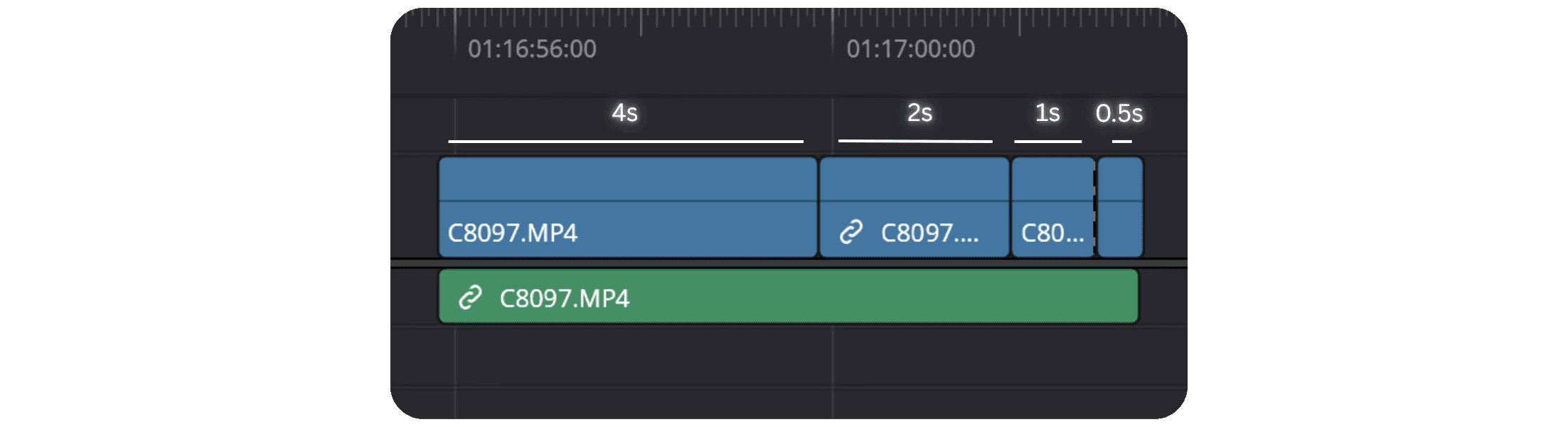
1️⃣ Build-Up Pattern (Acceleration)
Purpose
To manufacture urgency and pull the viewer forward before the content itself peaks.
This pattern prepares the audience emotionally so the reveal or climax lands harder.
It is not about action — it works even on static visuals, faces, or mundane actions.
Key Idea
The brain reads shortening gaps as approaching danger or payoff.
Humans evolved to associate faster sensory input with immediacy:
footsteps approaching, heartbeat rising, breath tightening.
When cuts compress, the nervous system escalates automatically — regardless of logic.
Graph Logic (with durations)
Durations:
4s → 2s → 1s → 0.5sX-Axis: Timeline progression (cut count moves forward cleanly)
Y-Axis: Shot duration
Every cut must be shorter than the last
Can taper gently or drop sharply, but never stabilises
Visual Shape: Descending staircase or tightening curve
⚠️ Warning
If even one cut holds or increases, the acceleration illusion breaks — tension leaks out instantly.
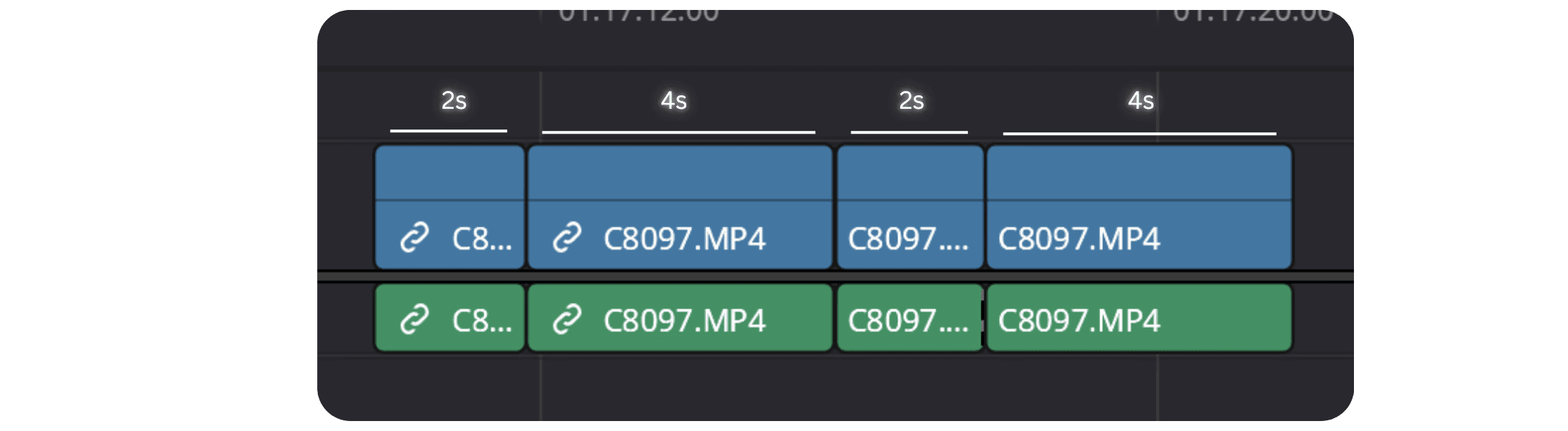
2️⃣ Call & Response Pattern (Alternating)
Purpose
To create meaning through contrast — between characters, ideas, emotions, or visual states.
This rhythm makes the edit conversational.
It’s the backbone of dialogue scenes, reaction-based humor, and visual debates.
Key Idea
Rhythm isn’t speed here — it’s relationship.
One shot asks.
The next answers.
Duration becomes a form of body language.
Graph Logic (with durations)
Durations:
2s → 4s → 2s → 4sX-Axis: Timeline
Y-Axis: Shot duration
Two fixed values repeat consistently
No upward or downward trend
Visual Shape: Zig-zag / square wave
⚠️ Warning
Break the alternation once, and the viewer stops subconsciously pairing shots — the “conversation” dies.
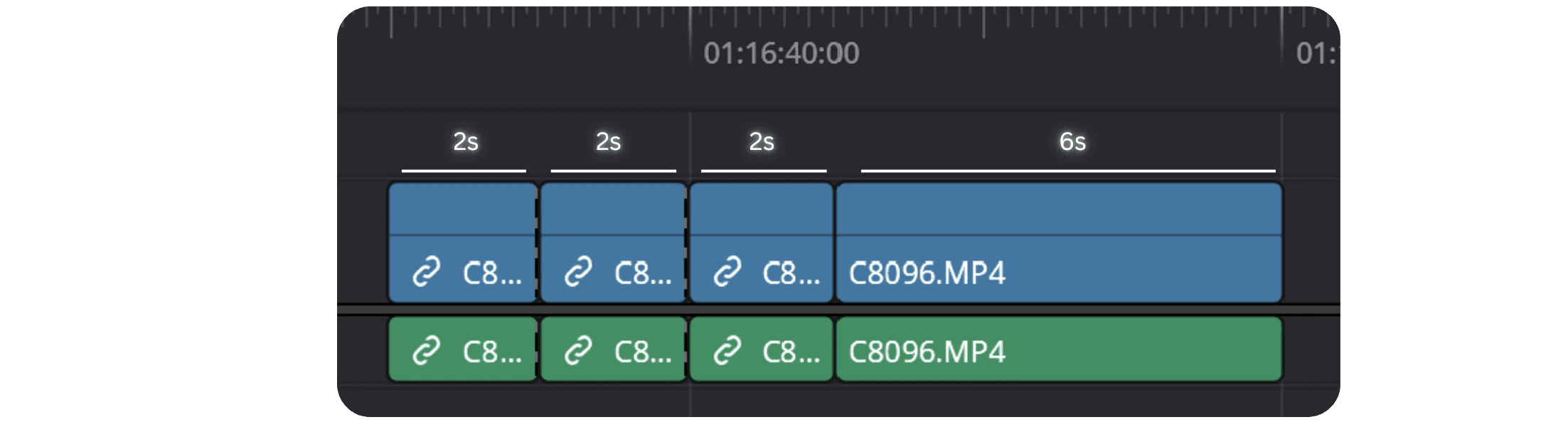
3️⃣ Impact Pattern
(The Drop)
Purpose
To force attention and isolate a moment so it feels heavier than everything before it.
This is how editors make silence loud.
Key Idea
Impact comes from violated expectation, not volume.
The viewer learns a rhythm — then the editor betrays it.
Graph Logic (with durations)
Durations:
2s → 2s → 2s → 6sX-Axis: Timeline
Y-Axis: Shot duration
Repetition establishes comfort
Final hold dominates the graph
Visual Shape: Short bars → sudden wide plateau
⚠️ Warning
If the final shot isn’t dramatically longer, the moment feels weak instead of deliberate.
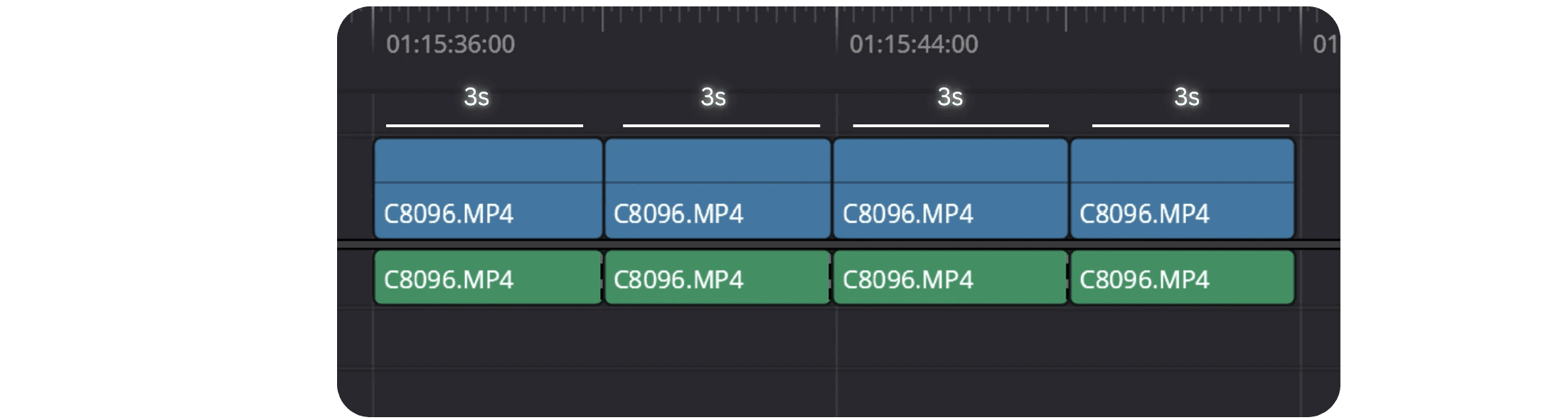
4️⃣ Plateau Pattern (Sustained Tempo)
Purpose
To remove editorial presence and let the viewer observe without manipulation.
Often used for realism, seriousness, or emotional neutrality.
This is restraint — not laziness.
Key Idea
When rhythm stops changing, the brain stops timing and starts watching.
The audience forgets the edit exists.
Graph Logic (with durations)
Durations:
4s → 4s → 4s → 4sX-Axis: Timeline
Y-Axis: Shot duration
Zero variance
Visual Shape: Perfect horizontal line
⚠️ Warning
Even a0.5sdeviation reintroduces rhythm awareness and breaks immersion.
5️⃣ Staggered Escalation Pattern (Uneven Build-Up)
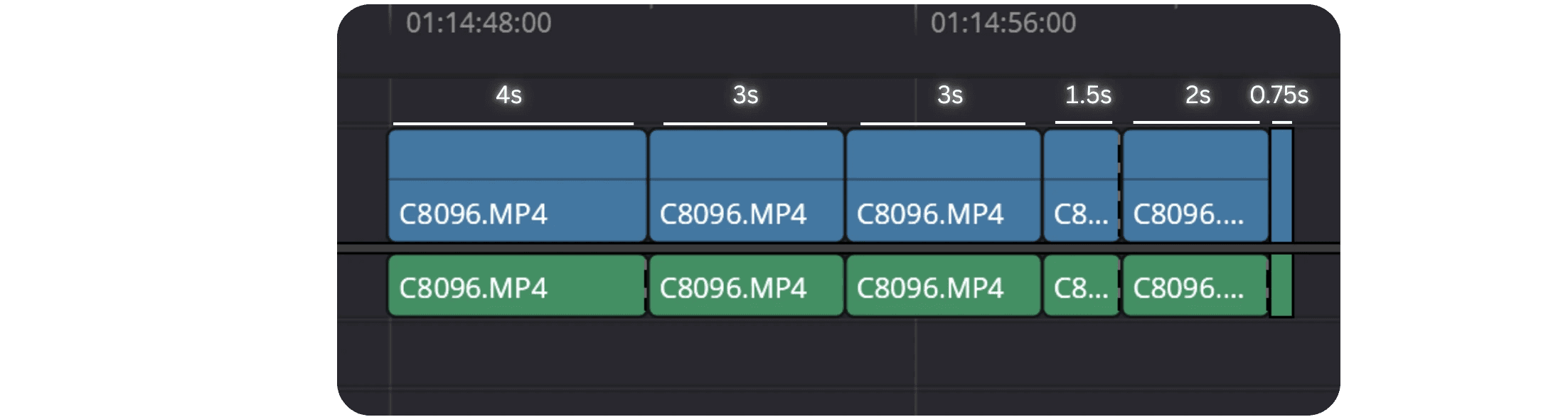
Purpose
To create tension that feels human and unstable, not mathematically engineered.
Perfect acceleration feels artificial.
This feels real.
Key Idea
Real stress doesn’t rise cleanly — it stutters, repeats, and spikes.
The audience senses unpredictability.
Graph Logic (with durations)
Durations:
4s → 3s → 3s → 1.5s → 2s → 0.75sX-Axis: Timeline
Y-Axis: Shot duration
Overall downward direction
Small reversals allowed
Visual Shape: Jagged descending staircase
⚠️ Warning
Smooth this too much and it collapses into a generic build-up.
6️⃣ False Calm Pattern (Deceptive Stability)
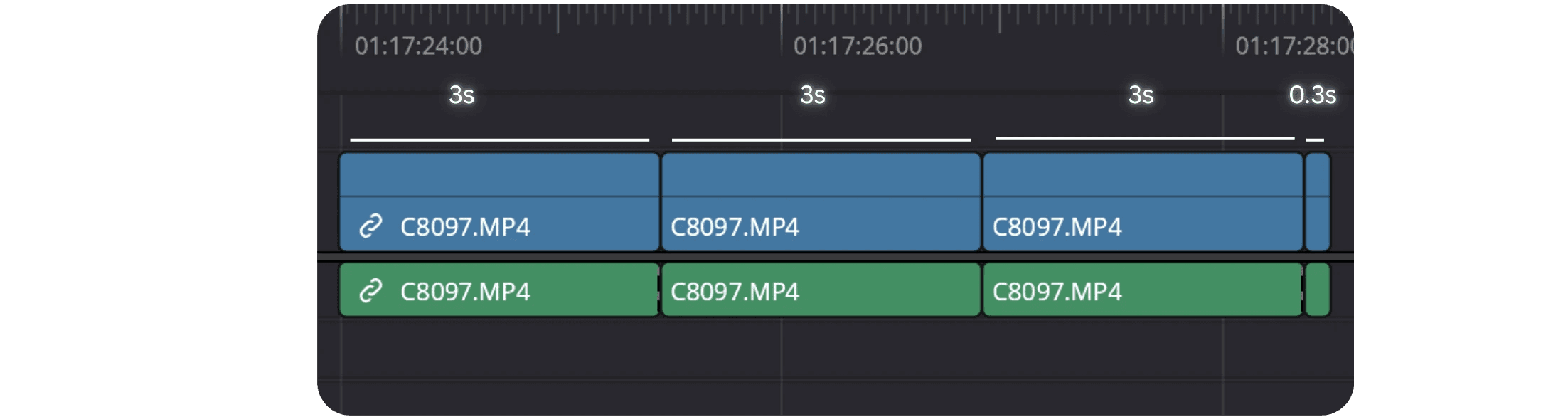
Purpose
To weaponize comfort — making the audience feel safe so the disruption hits harder.
This is psychological misdirection.
Key Idea
Rhythm earns trust — then breaks it.
The shock works because the viewer believed the pattern.
Graph Logic (with durations)
Durations:
3s → 3s → 3s → 3s → 0.3s(or →8s)X-Axis: Timeline
Y-Axis: Shot duration
Extended flat plateau
One extreme deviation
Visual Shape: Flat line → sudden spike or plunge
⚠️ Warning
If the calm is too short, the audience never relaxes — the surprise weakens.
7️⃣ Breath Pattern (Expand → Compress → Expand)
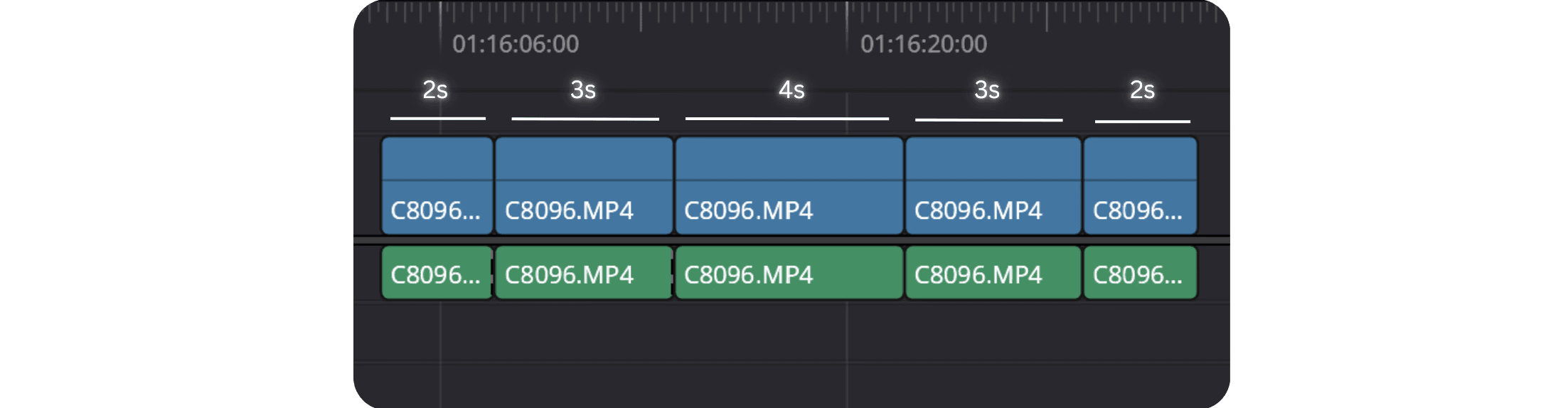
Purpose
To guide emotional digestion — tension, realization, and release.
This is pacing that feels alive.
Key Idea
Viewers emotionally breathe with the edit.
Expansion allows reflection.
Compression creates pressure.
Graph Logic (with durations)
Durations:
2s → 3s → 4s → 3s → 2sX-Axis: Timeline
Y-Axis: Shot duration
Perfect symmetry
Visual Shape: Bell curve / hill
⚠️ Warning
Asymmetry turns breath into stumble.
8️⃣ Interrupt Pattern (Rhythmic Sabotage)
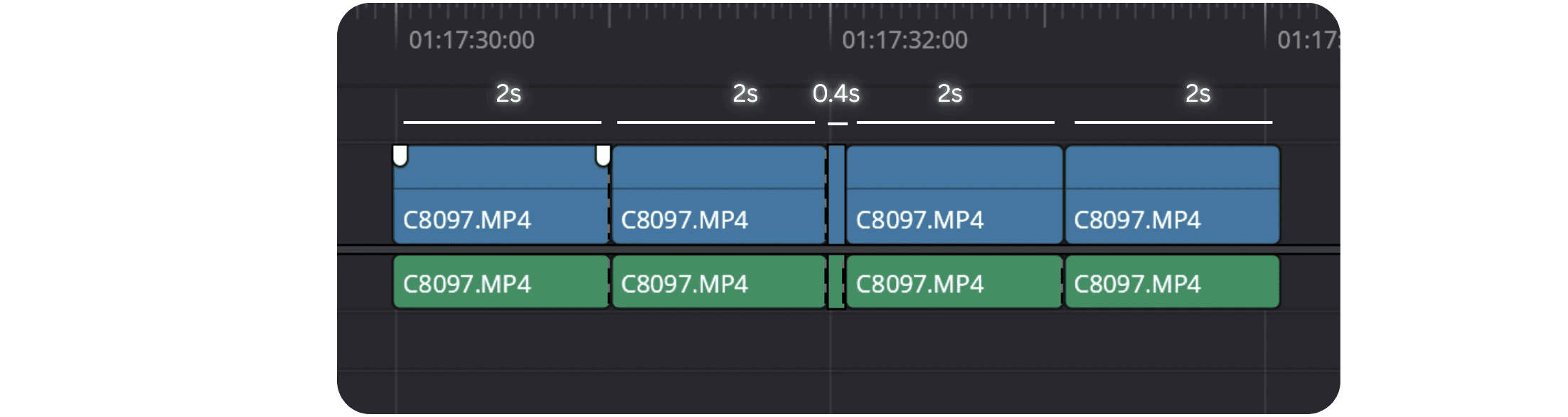
Purpose
To snap attention by inserting something that feels intentionally wrong.
Used for irony, humor, or shock.
Key Idea
One wrong note reframes the entire melody.
The viewer becomes alert again.
Graph Logic (with durations)
Durations:
2s → 2s → 0.4s → 2s → 2sX-Axis: Timeline
Y-Axis: Shot duration
Stable baseline
Single violent deviation
Visual Shape: Uniform bars + one spike
⚠️ Warning
More than one interruption turns intent into chaos.
9️⃣ Compression Burst Pattern (Density Spike)
Purpose
To simulate overload — mental noise, panic, chaos, or information flood.
This overwhelms cognition on purpose.
Key Idea
Speed excites — density suffocates.
The viewer doesn’t analyze; they endure.
Graph Logic (with durations)
Durations:
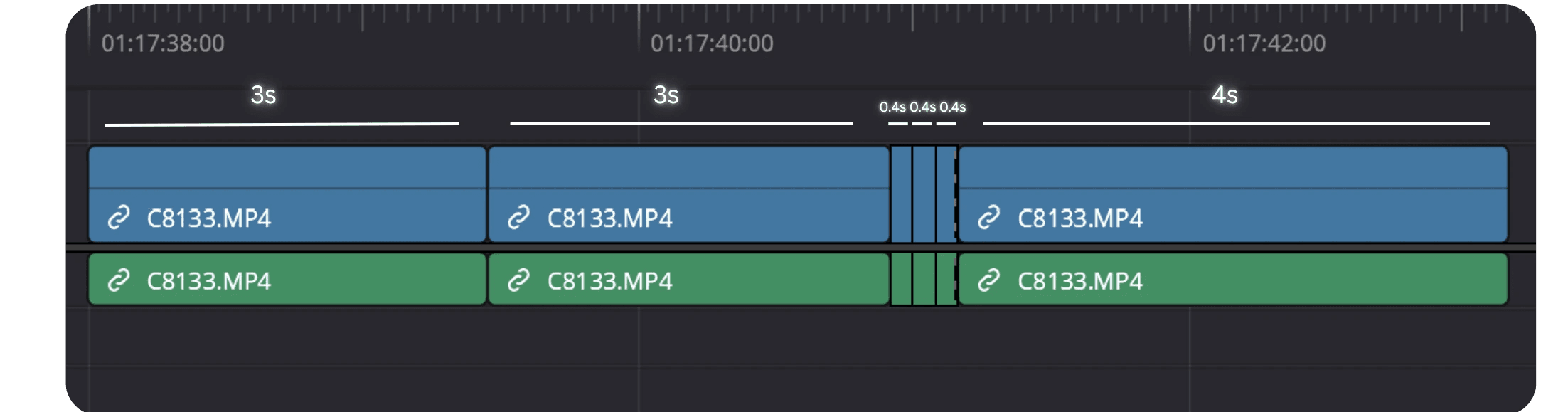
3s → 3s → 0.4s → 0.4s → 0.4s → 4sX-Axis: Timeline
Y-Axis: Shot duration
Calm setup
Tight cluster
Long release
Visual Shape: Plateau → dense block → wide gap
⚠️ Warning
No release = viewer fatigue, not impact.
🔟 Echo Pattern (Rhythmic Recall / Motif)
Purpose
To create memory and thematic unity across scenes or acts.
This is rhythm used as storytelling glue.
Key Idea
Rhythm can be remembered like music.
The audience feels recognition before they understand it.
Graph Logic (with durations)
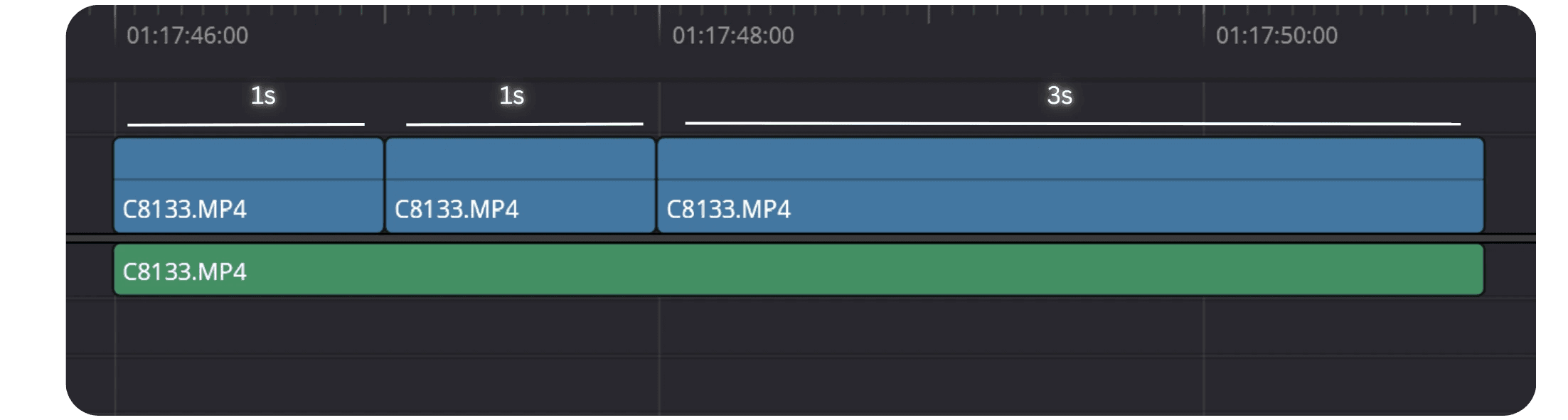
Pattern A:
1s → 1s → 3sAppears at Time A
Disappears
Returns unchanged at Time B
Visual Shape: Identical micro-graphs separated in time
⚠️ Warning
Altering durations breaks recognition — it’s no longer an echo.

You’ve Scrolled Enough.
Now It’s Time to Create.
15 weeks from now, you could still be scrolling… or editing videos that make people stop scrolling.